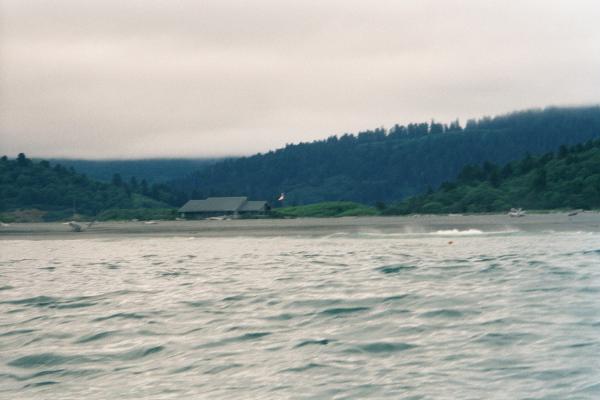
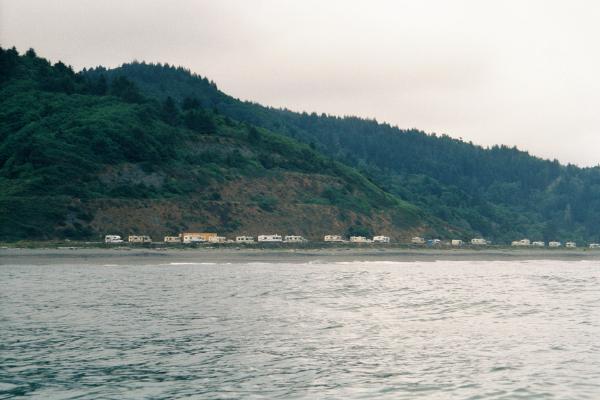
Getting there before 5:00 was important because I wanted to talk to the rangers about leaving my car. I figured I could leave my car at the Freshwater Lagoon campground, which is an artificial beach created by the placement of Highway 101. It started out completely unregulated and the locals and RV'ers like it that way. They have resisted letting this beach fall under the jurisdiction of any park system. It is free to park there, camp in your RV, camp on the beach, drive on the beach, whatever. The rangers think it is totally out of control and think that this beach needs to be regulated. The locals have hand lettered signs on their buildings that say "The last FREE beach in California deserves to be saved!". By this I assume they mean that it should be allowed to stay unregulated and free. The park rangers want to put up fences and barricades, charge fees to camp, restrict the number of campers on the beach, and forbid driving on the beach. The rangers think all these things will "save" the beach, so the local signs could be interpreted in support of either viewpoint. I considered pointing out to them that they should re-write their signs, but never got around to it.
Last year I paddled down to Freshwater Lagoon from Del Norte County and looked at the beaches without landing. This year I wanted to pick up where I left off. I talked to a ranger at the nearby Redwood Park Information Center and asked about the advisability of leaving my car in different places. Ranger Roy Rickey cringed at my suggestion of leaving my car at Freshwater. He suggested instead that I leave the car in a rarely used parking lot at the information center. I was flabbergasted and jumped at the chance. I have had terrible recursive conversations with rangers up and down the coast about leaving a car in their parking lots and hadn't even considering asking the question! The information center has a locking gate, so I would have to let myself get locked in right away and plan on only picking it up during the normal hours of operation. I would have to launch a few kilometers north of where I had planned and would have to launch from a dumpy beach. But It would be an excellent place to leave a car!
I left a copy of my float plan with Ranger Rickey. At first I considered getting ready to launch because the water was so calm. But where could I go in the remaining two hours of daylight? It took me over an hour to get my gear packed into the boat the first time and rolled out to the edge of the beach. It would still take more time to get into my wetsuit and on the water, then my equipment would be wet for my first full day on the water. I decided to walk into the nearby town of Orick for dinner instead. I felt nervous about my boat sitting in the dunes. I was nervous about doing a 180 kilometer expedition on a rugged and unknown (to me) coastline. I was nervous about leaving my car behind with a poor plan for getting back to it. I was too nervous to eat but forced myself to eat dinner anyway, feeling like the condemned man at his last meal. I felt like I was shaking inside and wondered if people could tell from the outside. I walked back after dinner to sleep next to my boat in the sand. There is this point at the start of a trip where I feel neither fish nor foul: I'm not a camper yet, so I don't want to unpack my gear, but I have to take some of it out even to camp next to my car.
I slept OK and got up at 6:00 AM. I want to put on my wetsuit and get started but it doesn't work that easily. The first priority is breakfast, not because I'm hungry but to send a message to my lower digestive tract that "it is time to get moving". I can't put the wetsuit on until then, so I can't move the boat too close to the rising tide. I compromised just above the high tide line and re-packed the boat. Still no movement. I finally got to put my wetsuit on after 8:00 AM.
The water looked calm the night before and easy to launch over at 6:00 AM but it looked pretty rough a few hours later. Is this just nerves? I was using my new fiberglass Coaster sit-inside kayak and discovered that I should have practiced launching it fully loaded before this. It is heavy and doesn't slip into the water like when it is empty. The slightest sideways current from the wash of the waves turns the boat sideways where I cannot turn it back from inside. I had to get out and let the boat float sideways looking for a spot where two wash currents meat. This seemed to be where the waves looked the roughest. On my second try inside the boat I only managed to keep the boat from turning sideways by jamming my paddle in the sand to prevent it. This risks breaking the paddle. I shouted at the ocean "Take me! Take me!" and eventually the boat inched down through the wash into water deep enough to float. I was exhausted from pushing and turning the boat, my knuckles scraped open on the sand and I hadn't gone 100 meters yet. Then the ocean took pity on me and a miracle happened: As the tail of my boat finally lifted off the sand the waves calmed down and let me get past the breakers without getting wet. Finally I was on my way.
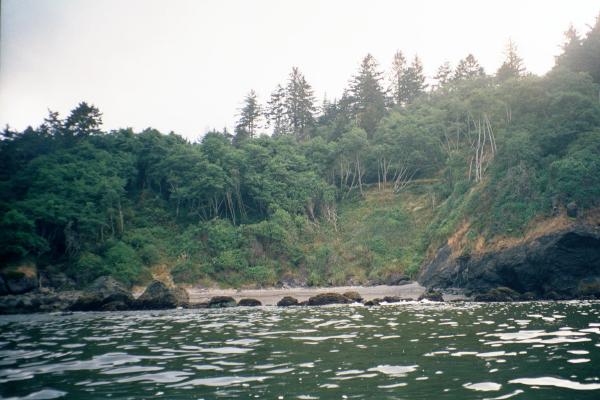
I paddled far from shore and turned south. After 9:00 AM I passed the spot I originally planned to launch, just south of Freshwater Lagoon where a small point and some rocks give scant protection on this long sandy beach. It looked like a worse place to launch than the dumpy beach I started from by the information center.
I dug in and started working south to get past 16 kilometers of dumping "boring" beach. I saw pods of little dolphins everywhere. At one point I saw a rock ahead where my charts showed none. The next time I could see that spot there was white water like I would expect from waves passing over a rock. Later I heard a splash on my right and wondered if I had passed this rock unawares. But then the rocks started breathing explosively and I found myself near (300 meters) a pod of humpback whales! I saw a pair that always came up together and at least one other that came up separately. They were going my way, so we paddled a parallel course for almost an hour until suddenly I realized that their blowing breath had been gone for several minutes. I never saw them again.
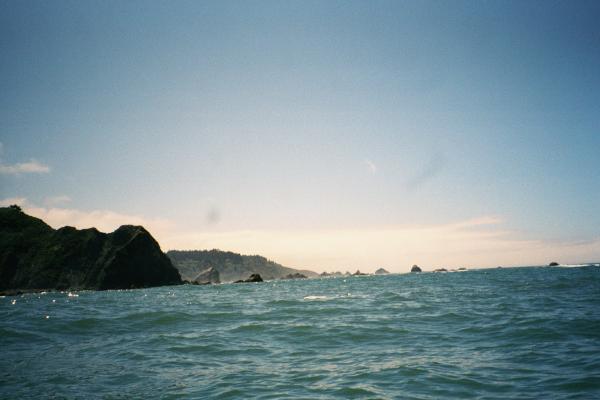
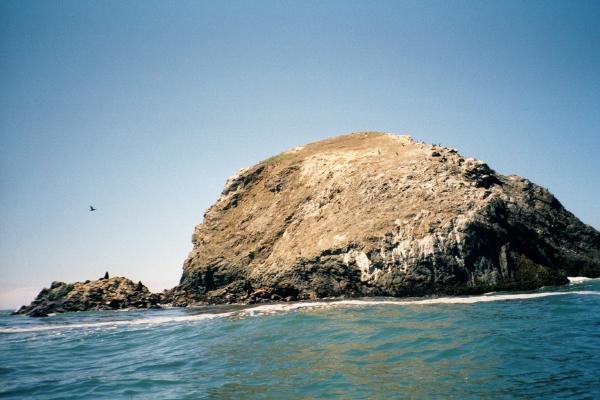
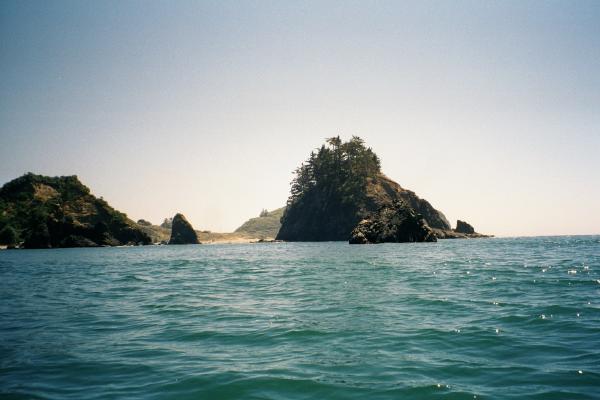
After 16 kilometers of "boring" beach with dolphins and whales I approached Patrick's Point, My Coaster is a boat designed for paddling in rock gardens, but fully loaded with camping gear it feels sluggish and unresponsive. As a result I was a little conservative going behind the rocks of the point. Around this point and the next I start seeing California Sea Lions on the rocks. They barked at me and jumped off the rocks! Usually sea lions are less shy than this. I landed on a private little beach for lunch with mild waves courtesy of the protection of Patrick's Point.
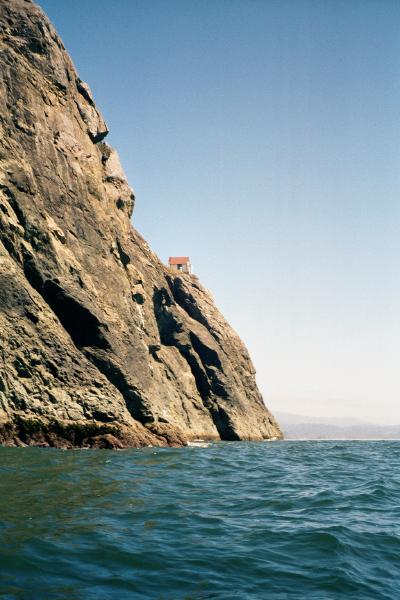
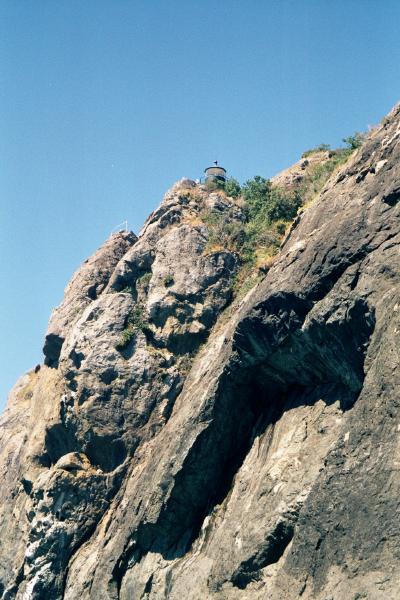
After lunch I paddled past one little point after another until I rounded Elk Head and found beautiful Trinidad State Beach. The first cove, College Cove, is isolated from the main beach and is a place I considered "Guerrilla Camping" in a park that normally doesn't allow overnight camping. But it occurred to me that I put things like this in my float plan and left it with some other rangers. Perhaps they have called their buddies at Trinidad and warned them that I am coming. It was also only 2:00 AM on a bright sunny day so I kept going. The main beach here ends at Trinidad Head, a huge monolithic rock (100 meters tall) connected to the mainland by a spit (and roads and houses). The sides of the head are so steep that I could only see glimpses of the cupola of the lighthouse until far enough past it to look back and up.
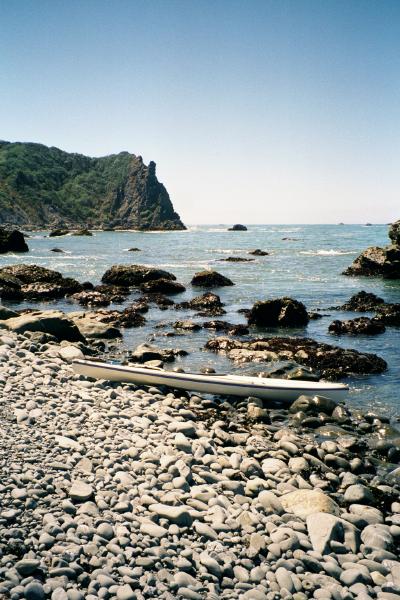
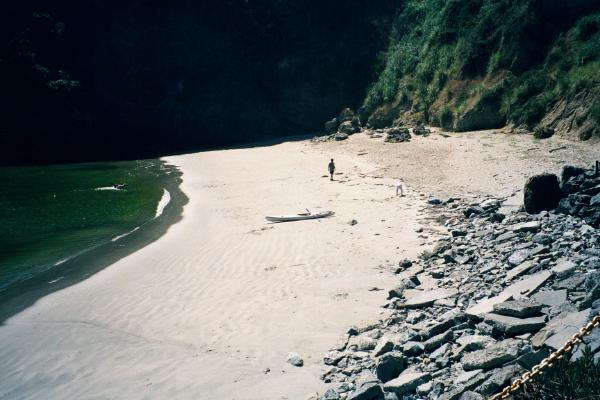
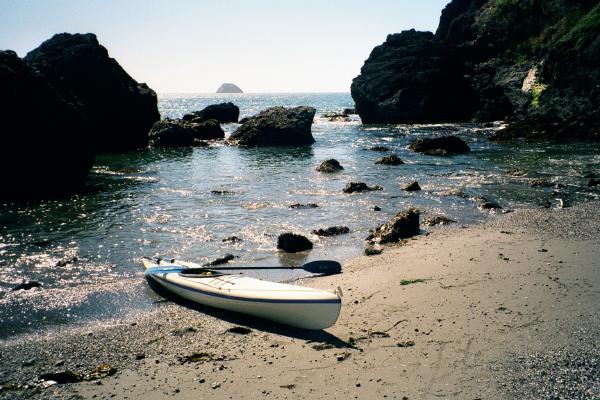
I stopped at the beach on Trinidad Bay and then continued down the rocky coastline south of the bay looking for a beach that was not visible from the houses or the road. I bypassed the nude beach and finally found a small pocket beach protected by a field of rocks I had to work my way through. I asked some locals on the beach if camping would be allowed and it turned out they had camped there before and figured that it would probably be OK.